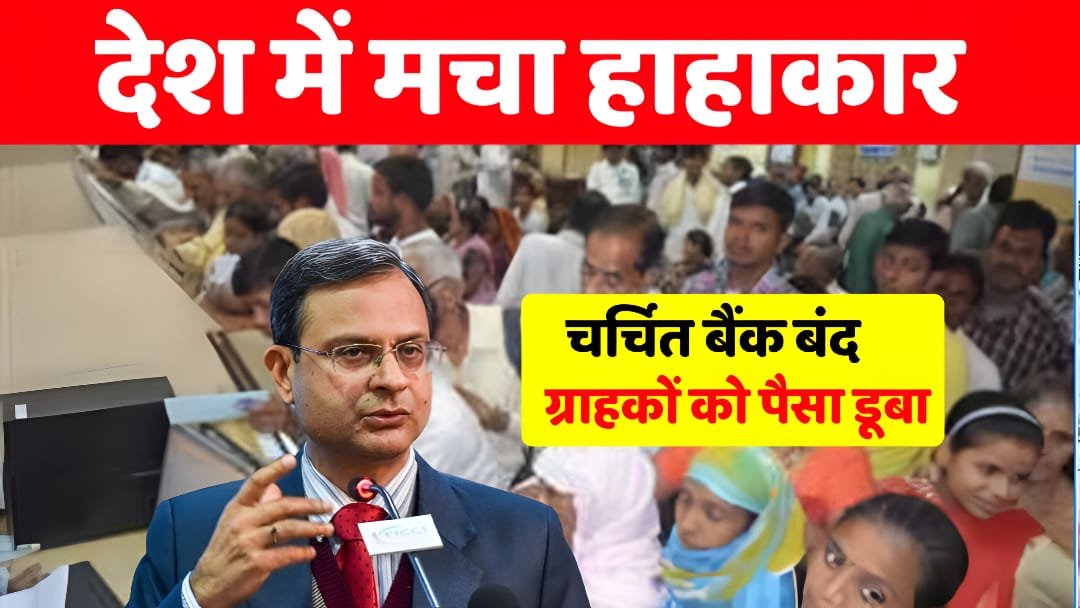
The country’s banking system has been shaken as the Reserve Bank of India (RBI) has issued an order to immediately halt services of a famous cooperative bank. This decision has created chaos in bank branches, as customers are panicking thinking their hard-earned money might sink. The RBI has taken this step considering the bank’s deteriorating financial condition and financial risks, to protect the deposited capital of the general public in time.
Why Was the Bank Closed?
When a bank’s financial condition becomes so poor that it cannot manage its customers’ deposits, the RBI imposes special guidelines on such banks. The purpose is to prevent the bank from misusing its resources and protect customer interests.
In such cases, all major services of the bank—such as withdrawals, transactions, opening new accounts, and issuing loans—are limited or temporarily suspended to prevent financial losses. This regulatory action helps maintain the stability of the banking system.
Will Your Deposited Money Be Lost?
When customers hear such news, they first think about whether their money is safe or not. Here it’s important for you to know that all deposits in authorized banks in India are covered by deposit insurance of up to ₹5 lakh provided by the RBI.
This means that even if the bank completely fails, customers can get back up to ₹5 lakh—whether it’s a savings account, fixed deposit, or current account. Therefore, most small depositors need not worry about losing their money completely.
What Should You Do Now?
If you also have an account in this bank, first don’t panic. During such times, it’s essential that you carefully read the official notice or website information issued by the bank.
Additionally, keep all necessary documents such as passbook, statements, and Aadhaar linking safely. The RBI and bank provide updates from time to time, so keep your mobile number and email updated with the bank so that any information reaches you on time.
Furthermore, avoid making any hasty decisions and wait for official communication from the bank or regulatory authorities. This will help you understand the exact situation and next steps.
Can the Bank Resume Operations in Future?
The RBI’s decision is not always permanent. To improve the bank’s condition, the RBI keeps it under supervision for a certain period. If during this time the bank improves its financial condition, its services can be resumed.
Moreover, sometimes weak banks are merged with stronger banks, which ensures both the security of customers’ deposits and continued services. This merger process often provides better security for customer funds.
However, the timeline for such recovery or merger depends entirely on the bank’s financial rehabilitation and RBI’s assessment of its viability.
Understanding Deposit Insurance Coverage
The Deposit Insurance and Credit Guarantee Corporation (DICGC) provides insurance coverage for bank deposits in India. This insurance covers deposits up to ₹5 lakh per depositor per bank.
The insurance covers various types of deposits including savings accounts, fixed deposits, current accounts, and recurring deposits. However, it’s important to note that this coverage is per bank, not per account.
Steps to Protect Your Financial Interests
During such banking crises, customers should take several precautionary measures to protect their financial interests:
- Maintain updated contact information with the bank
- Keep all banking documents and transaction records safe
- Monitor official communications from RBI and the affected bank
- Avoid spreading or believing unverified information
- Consider diversifying deposits across multiple banks in future
Disclaimer: This article is based on various media reports and RBI’s public guidelines. The information provided in the article is for the assistance of the general public. Please verify with the concerned bank or RBI’s official website before making any financial decisions.
Frequently Asked Questions
Is my money completely lost if RBI closes a bank?
No, your money up to ₹5 lakh is protected by deposit insurance provided by DICGC. Even if the bank fails completely, you can claim this insured amount through the proper process.
How long does it take to get money back from a closed bank?
The timeline varies depending on the bank’s situation. In case of permanent closure, the insurance claim process typically takes a few months to complete after proper verification.
Can I withdraw money immediately when RBI restricts a bank?
Usually, when RBI imposes restrictions, withdrawal limits are set. You may be able to withdraw small amounts for essential needs, but large withdrawals are typically suspended until further notice.
What happens to my loans if the bank is closed?
Your loan obligations continue even if the bank is closed. The loan portfolio is usually transferred to another bank or handled by the liquidator, and you must continue making payments as per your agreement.
How can I check if my bank is under RBI restrictions?
You can check the RBI’s official website for any notifications about bank restrictions or closures. The central bank regularly publishes such important announcements on their website and through official press releases.
